The Storm Before the Storm
Before the New Testament opens, the world has already been shaken.
“Behold, I will send you Elijah the prophet before the great and terrible day of Yahweh comes. He will turn the hearts of the fathers to the children and the hearts of the children to their fathers, lest I come and strike the earth with a curse.”
And then nothing. Nothing at all. Sort of. These are (to many) the last words in the Old Testament from the book of Malachi. It’s widely accepted that the Old Testament ends 400 years before the New Testament story begins (or, if you’re a Roman Catholic, about 230–240 years before the Maccabees, and then another break of 160 years or so until we pick the story up again). Although Protestants don’t really engage much with the Maccabean rebellion, and for the most part, we really don’t think about the 400 years of nothingness in those undocumented years. It almost seems as though Malachi ended the Old Testament writings with an ominous warning, and then God just took a break: no burning bushes, no small still voices, no prophets, just an awkward silence. If I were an Israelite living in that time, I’d have to wonder if the “Shape up, I’m sending a messenger, and then I’ll be back,” was really a thing. For thousands of years, God has been visiting humans, angels fighting with people, miracles, prophets calling down fire, then nothing.
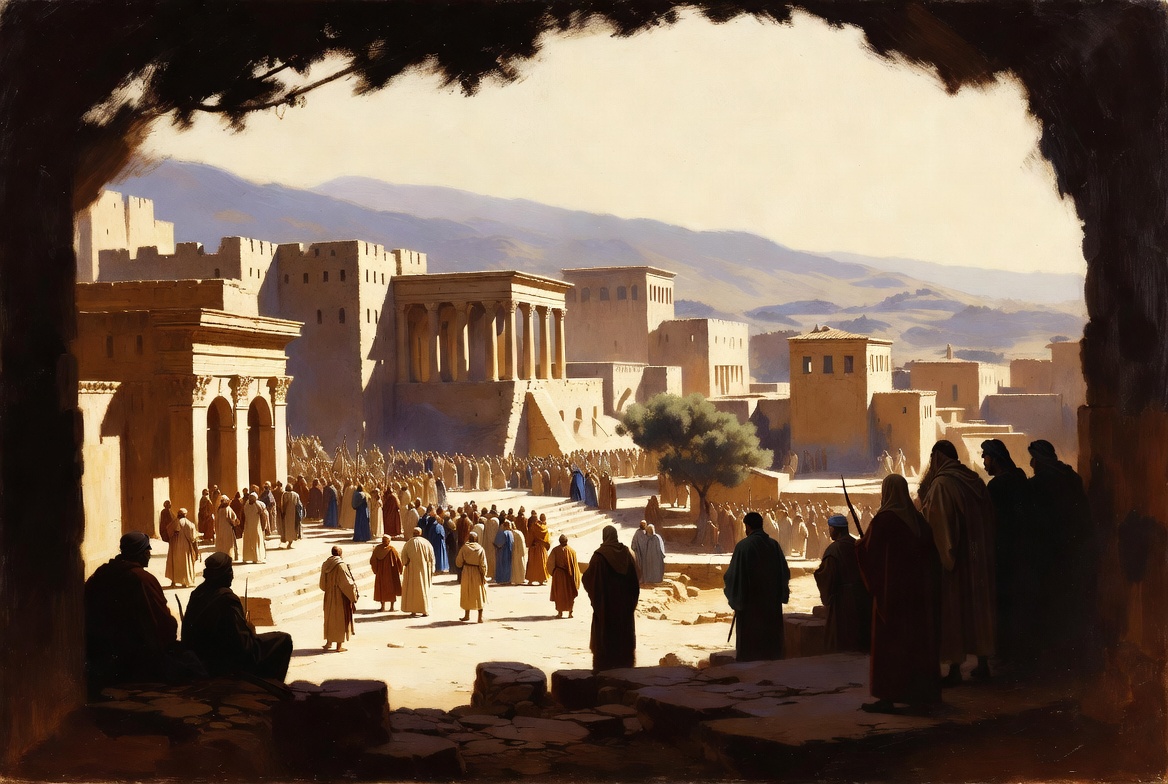
However, the truth is much less mundane, and it’s important to set the scene for the world Jesus was entering. During those years, Israel wasn’t just minding its own business, quietly doing its thing without anyone noticing. The Greeks, led by Alexander the Great, had marauded their way through the area, and his generals divided it up like kids fighting over a cake. Antiochus IV Epiphanes ended up in charge of Israel. In an effort to stamp some authority, and as a clear sign he wasn’t there to make friends, he marched into Jerusalem and sacrificed a pig on the altar in the Temple, and set up a statue of Zeus.
Catholics, you can skip this part; you already know it, but many Protestants don’t. If you’re interested, you’ll find this in the books 1 and 2 Maccabees. For us Protestants, they’re considered apocryphal books, which are interesting and give us insight into the history and times of the Bible, but they’re not considered a canonical part of Scripture. I don’t intend to argue the merits of whether or not these books (or many others, such as the books of Enoch) should be included in the canon; smarter brains than I have argued this, but we need to set the scene, and these books contain reliable history for us to work from, teaching us about the storm before the storm, as it were…
There was a family in Israel called the Maccabees, led by a man called Judas Maccabeus. In short, the Temple was taken, a pig was sacrificed, the Maccabees led a revolt, and the Temple was reclaimed. Sadly, even though the Temple had been won back, the Maccabean dynasty had died out by the time Jesus arrived because people couldn’t resist the lure of power and corruption. Caesar Augustus eventually filled the power vacuum, and Roman occupation took hold. At this time, after years of occupation, war, and rebellion, the Jews were ready for a deliverer. Unfortunately, the deliverer didn’t come as expected, with swords raised as the Maccabees had done over 100 years before; he arrived in a stable. They had no idea what they were getting, but the New Testament sets the scene for us before we get to that.
Stay Updated on Finding Jesus
Join the mailing list to receive weekly updates as the story unfolds.